Using Peer-Mentoring and Leadership in School Wellbeing Initiatives
Schools today are not just centers for academic learning; they are environments where emotional, social, and mental development take place. To create a supportive and inclusive atmosphere, many institutions are adopting innovative approaches that focus on student wellbeing. One of the most effective strategies is integrating peer-mentoring and leadership into school initiatives.
Well-structured school wellbeing programs create opportunities for students to support one another, fostering a culture of empathy and collaboration. These programs empower students to take active roles in promoting mental health, inclusivity, and positive relationships within the school community.
When aligned with a broader youth pathways program, peer-mentoring initiatives can extend beyond the classroom, helping students develop leadership skills and prepare for future challenges. This combination creates a holistic framework that supports both personal growth and academic success.
Understanding Peer-Mentoring in Schools
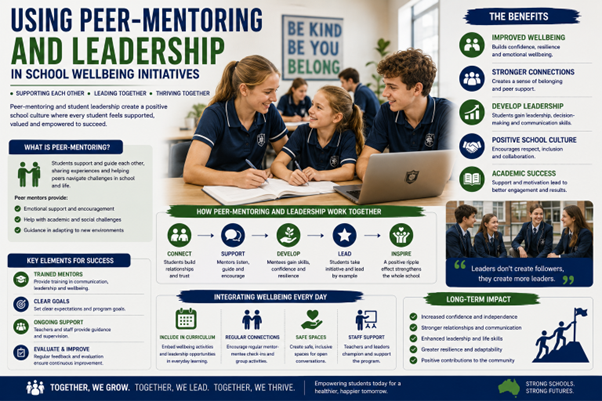
Peer-mentoring involves students supporting and guiding one another, often pairing older or more experienced students with younger peers. This approach leverages shared experiences, making it easier for students to connect and communicate.
Peer mentors provide:
- Emotional support and encouragement
- Guidance on academic and social challenges
- Assistance in adapting to new environments
Because mentors are peers rather than authority figures, mentees often feel more comfortable sharing concerns and seeking advice.
The Role of Leadership in Student Wellbeing
Leadership is a key component of effective wellbeing initiatives. When students are given opportunities to lead, they develop a sense of responsibility and ownership over their school environment.
Student leaders contribute by:
- Organising wellbeing activities
- Promoting inclusivity and respect
- Acting as role models for positive behaviour
Leadership roles help students build confidence, communication skills, and a strong sense of purpose.
Benefits of Peer-Mentoring Programs
Peer-mentoring offers a wide range of benefits for both mentors and mentees. It creates a supportive network that enhances the overall school experience.
Key benefits include:
- Improved emotional well-being
- Stronger sense of belonging
- Enhanced communication and social skills
- Reduced feelings of isolation
These programs also encourage collaboration, helping students learn from one another and build meaningful relationships.
Developing Leadership Skills Through Mentorship
Mentorship provides a practical platform for developing leadership skills. Students learn how to guide others, manage responsibilities, and make informed decisions.
Through peer-mentoring, students develop:
- Problem-solving abilities
- Empathy and active listening skills
- Conflict resolution techniques
- Confidence in decision-making
These skills are valuable not only in school but also in future academic and professional settings.
Creating a Positive School Culture
A strong peer-mentoring system contributes to a positive and inclusive school culture. When students support each other, it fosters an environment where everyone feels valued and respected.
This culture is built through:
- Encouraging open communication
- Promoting kindness and empathy
- Addressing issues collaboratively
A positive environment enhances both academic performance and overall well-being.
Implementing Effective Peer-Mentoring Programs
Successful peer-mentoring programs require careful planning and structure. Schools must ensure that mentors are well-prepared and supported.
Key elements of effective implementation include:
- Training mentors in communication and leadership
- Establishing clear goals and expectations
- Providing ongoing support and supervision
- Evaluating program outcomes regularly
A structured approach ensures that the program remains impactful and sustainable.
Addressing Challenges in Peer-Mentoring Initiatives
While peer-mentoring offers numerous benefits, it also comes with challenges that need to be managed effectively.
Common challenges include:
- Ensuring compatibility between mentors and mentees
- Maintaining consistent engagement
- Providing adequate training and resources
Addressing these challenges requires flexibility, continuous feedback, and a commitment to improvement.
Integrating Wellbeing into Daily School Life
For peer-mentoring to be truly effective, it must be integrated into the daily life of the school. This ensures that wellbeing becomes a continuous focus rather than a one-time initiative.
Schools can achieve this by:
- Incorporating wellbeing activities into the curriculum
- Encouraging regular mentor-mentee interactions
- Creating safe spaces for open discussions
This integration helps reinforce the importance of wellbeing and ensures lasting impact.
The Role of Teachers and Administrators
Teachers and administrators play a crucial role in supporting peer-mentoring and leadership initiatives. Their guidance ensures that programs are aligned with the school’s goals and values.
Their responsibilities include:
- Providing training and resources
- Monitoring program effectiveness
- Offering support and guidance to students
Collaboration between staff and students creates a strong foundation for successful initiatives.
Long-Term Impact on Students
The impact of peer-mentoring and leadership programs extends beyond the school environment. Students carry the skills and experiences gained into their future endeavours.
Long-term benefits include:
- Increased confidence and independence
- Stronger interpersonal skills
- Enhanced leadership capabilities
- Greater resilience in facing challenges
These outcomes contribute to the development of well-rounded individuals prepared for life beyond school.
Building Stronger Communities Through Student Leadership
Peer-mentoring and leadership are powerful tools in enhancing school wellbeing initiatives. By empowering students to support one another and take on leadership roles, schools create environments that promote growth, inclusivity, and resilience.
Through thoughtful implementation and ongoing support, these programs transform not only individual students but also the entire school community. Investing in peer-mentoring and leadership ensures a brighter, healthier, and more connected future for all students.